
View
The Netherlands
Location:
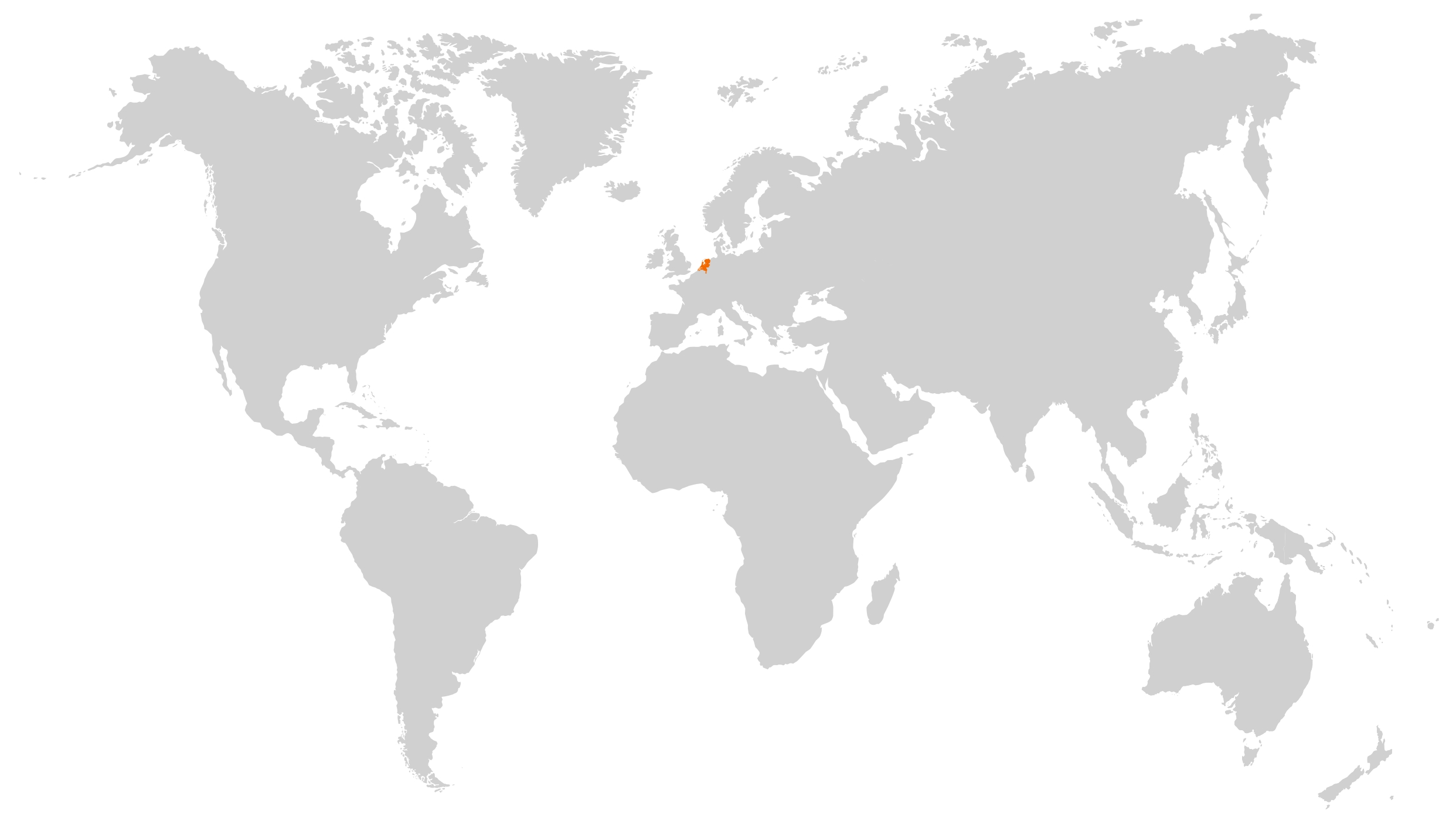
Western Europe bordering Germany, Belgium and
the North Sea
Head of State:
His Majesty King
Willem-Alexander,
King of the Netherlands,
Prince of Orange-Nassau
GDP per capita (World Bank, 2024):
57,800 US dollars
Monetary Unit:
Euro
English speaking Dutch people:
90%
Unemployment rate (CBS, 2024):
3,7%
Number of inhabitants per km2 (2024):
533
Number of inhabitants (2024):
18 milion
Number of provinces:
12
Surface area:
41,543 km2
Form of government:
Parliamentary democracy
(cabinet of Prime Minister
and Ministers) within a constitutional monarchy
Seat of government:
The Hague
Capital:
Amsterdam
Languages:
Dutch, Frisian and on the overseas
islands also English and Papiaments
Special municipalities:
The overseas islands of Bonaire, Saba and St. Eustatius,
all three of which are located in the Carribean.
Official name:
The kingdom consists of four entities.
The Netherlands and three territories in the Caribbean:
Aruba and Curaçao and St. Maarten
Official name:
Kingdom of the Netherlands
Go to World Expo 2025
Preface

Back to top
on the World Competitiveness Ranking
(Source: International
Institute for Management Development, 2024)
on the Global
Innovation Index
(Source: WIPO, 2023)
Greatest place to live
(Source: World Happiness Report, 2024)
Leading economy
worldwide bu Foreign
Direct Investment (FDI)
inward stock, 2,86 trilion US dollars
(Source: Statista, 2023)
Largest exporter of
goods in the world,
934,57 bilion US dollars
(Source: Statista, 2023)
Largest importer of
goods in the world,
842,05 bilion US dollars
(Source: Statista, 2023)
Largest exporter of
argicultural products
in the world
(Source: WUR/CBS, 2023)
Largest flower
esporter
(Source: OEC, 2022)
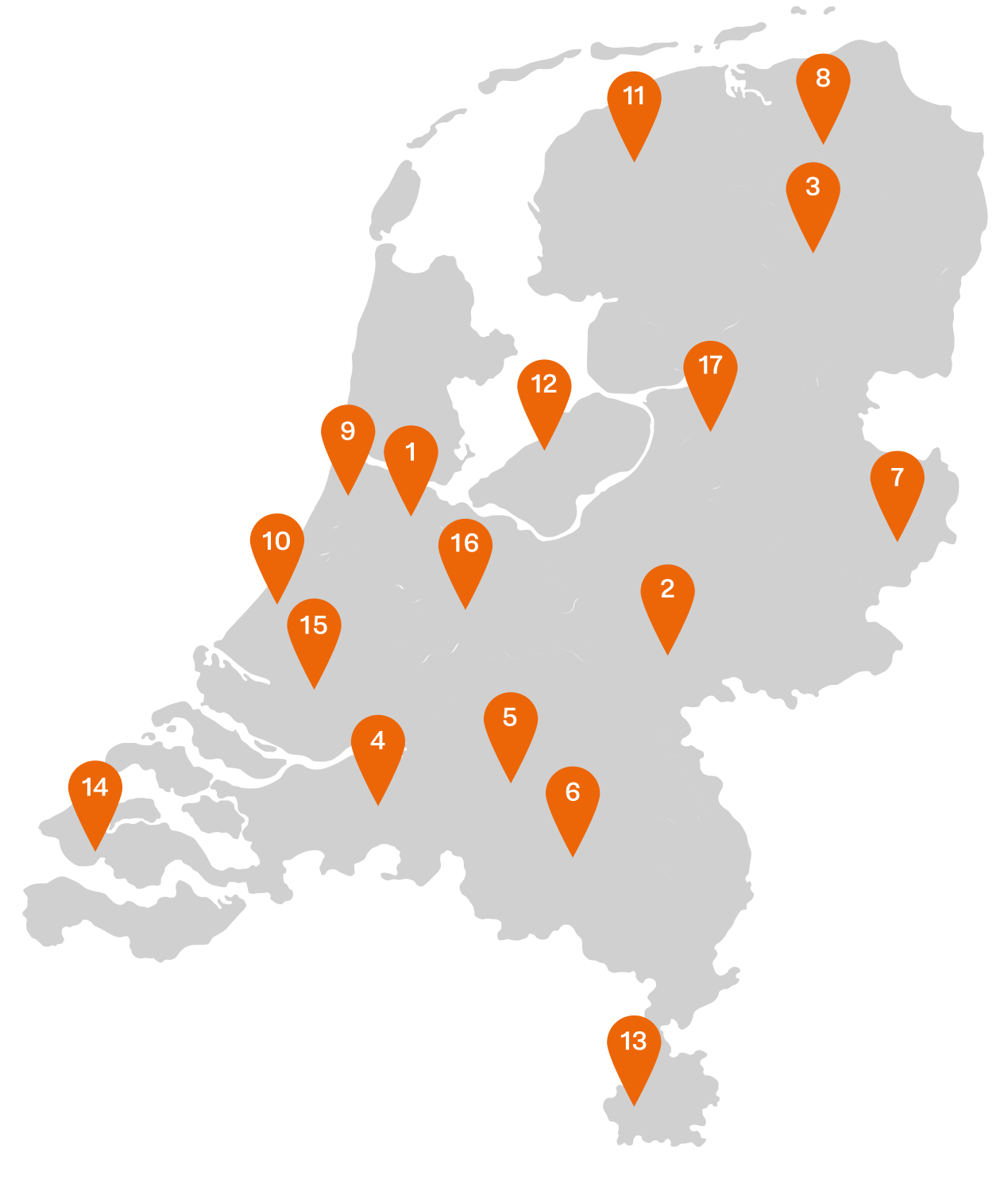
Locations
1. Amsterdam (and Airport Schiphol)
2. Arnhem
3. Assen
4. Breda
5. ‘s Hertogenbosch
6. Eindhoven
7. Enschede
8. Groningen
9. Haarlem
10. The Hague
11. Leeuwarden
12. Lelystad
13. Maastricht
14. Middelburg
15. Rotterdam
16. Utrecht
17. Zwolle
In 2025, the Netherlands and Japan celebrate 425 years of relations, built on mutual curiosity and a shared drive for innovation.
The Dutch and Japanese approach
The partnership between the Netherlands and Japan extends far beyond simple trade agreements or technological collaborations. At its core, it is a relationship built on shared values and a common vision for a better world. These principles guide our actions on the global stage and inform our approach to addressing the challenges facing humanity. Furthermore, both the Netherlands and Japan recognise the transformative power of technology and innovation. We are committed to building a vibrant ecosystem of research, development, and entrepreneurship, encouraging collaboration between universities, businesses, and government agencies. We believe that by working together, we can unlock new possibilities and create solutions that benefit not only our own citizens but the world as a whole.
A future of collaboration and innovation
As we look ahead to the next 425 years, the Netherlands and Japan are committed to deepening our partnership and expanding our collaboration in new and rapidly advancing areas. We see tremendous potential for working together in fields such as artificial intelligence, quantum computing, and biotechnology, leveraging our respective strengths to drive innovation and create solutions to global challenges
From the arrival of De Liefde in 1600 to today’s advanced technological collaborations, this spirit of exploration continues to define our partnership. It provides a strong foundation for addressing today’s global challenges together. For nearly 240 years, the Netherlands served as Japan’s sole European gateway, with the Rangaku learning centres laying the groundwork for Japan’s modernisation through the introduction of Western science, medicine, and engineering. This tradition of knowledge exchange continues today, as we collaborate on digital solutions to transform modern daily life.
Today, the ties between the Netherlands and Japan are stronger than ever, evolving into a dynamic and multifaceted partnership that spans trade, investment, research, and cultural exchange. The Netherlands admires Japan's rich cultural heritage, its artistic traditions, and its unique ability to blend ancient customs with modern innovation. In turn, Japan values the Dutch spirit of innovation, our pragmatic approach to problem-solving, and our expertise in developing cutting-edge solutions to complex societal challenges. The Dutch approach to tackling issues such as aging populations, urbanisation, and sustainability resonates deeply with Japan, as we both strive to create more resilient and inclusive societies.
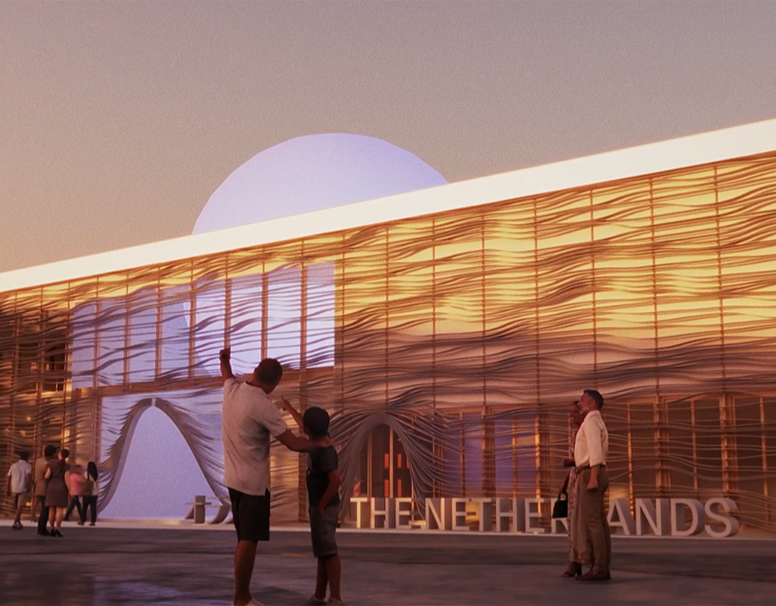
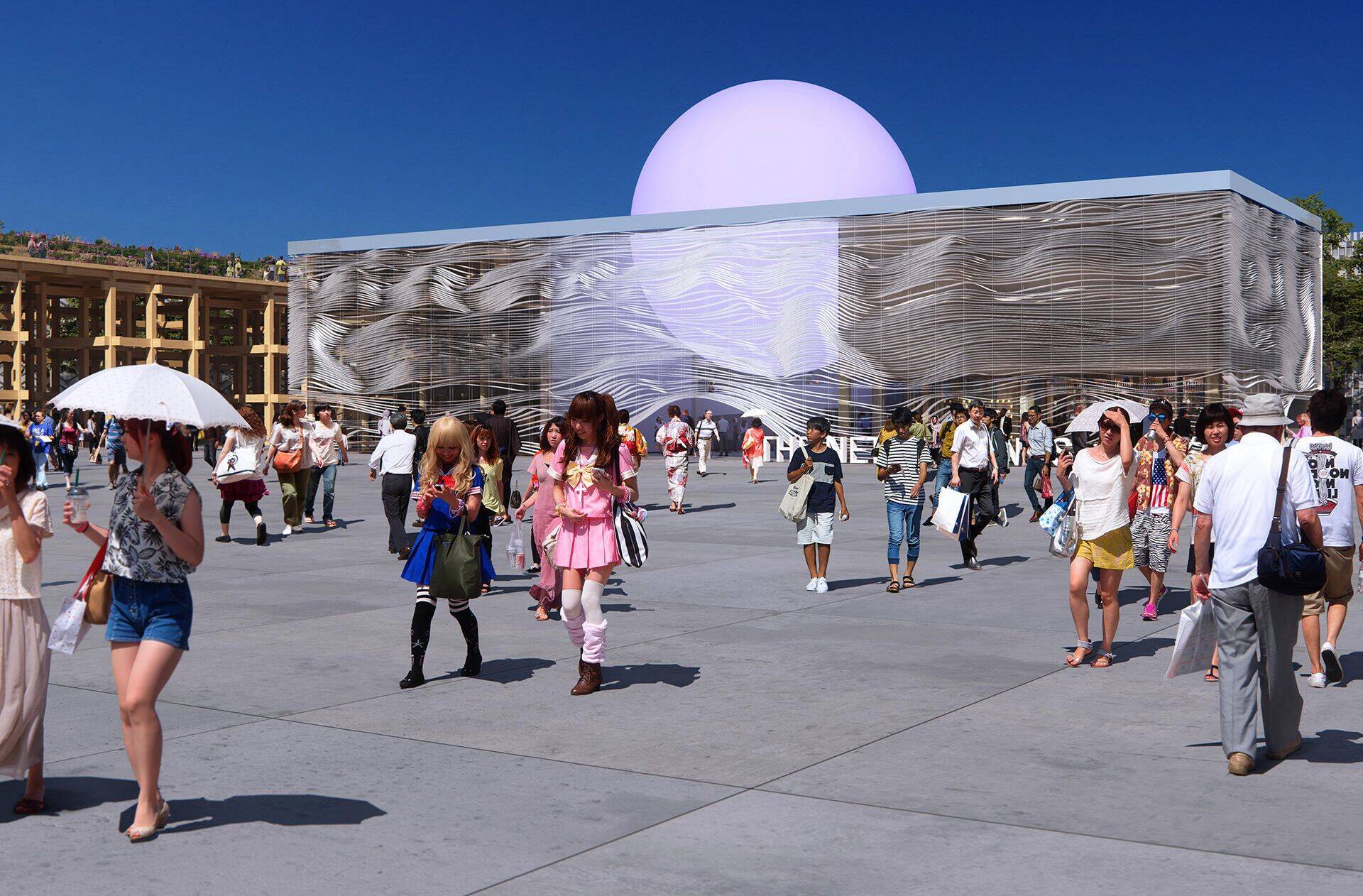
As we celebrate this special anniversary, the Netherlands proudly participates in Expo 2025 Osaka, Kansai, with a circular pavilion themed “Common Ground.” This global event offers a unique platform to showcase Dutch innovation and strengthen collaboration with Japan across high-impact sectors.
co-creating pioneering solutions for global challenges
How do the Dutch make a difference?
Through their interactive approach to finding innovative solutions to the big challenges facing the world today. The Dutch way of thinking and working has been shaped by centuries of living in the low-lying delta of the Netherlands. Through the ages, the Dutch have joined forces to find ingenious ways to tackle challenges like water, urbanisation, energy, food, health and security. By being inventive, pragmatic and open to new challenges, the Dutch have created a flourishing and resilient land.
The Netherlands is a constantly evolving ecosystem of cities, industry, agriculture and nature, all integrated through smart infrastructure. It is a source of knowledge and experience that the Dutch are keen to share with others. Learning from the past to create a better future. Together, seeking sustainable solutions for the most liveable world.